Artificial Intelligence (AI) is no longer confined to smartphones and computers.

The next big leap in technology is wearable AI assistants, and leading the charge is the Humane AI Pin. This revolutionary device promises to redefine how we interact with technology, making it more intuitive, seamless, and, most importantly, humane.

In this in-depth review, we’ll explore:

  • What is the Humane AI Pin?
  • How does wearable AI work?
  • Key features of the Humane AI Pin
  • Comparison with other wearable AI devices
  • Pros and cons
  • The future of AI wearables


What is the Humane AI Pin?

The Humane AI Pin is a screenless, wearable AI assistant designed to integrate seamlessly into daily life. Unlike smartphones, which demand constant attention, the AI Pin operates through voice commands, gestures, and a laser-projected interface.

Developed by former Apple executives, this device focuses on minimalism, privacy, and contextual awareness. It aims to reduce screen time while keeping users connected to essential digital services.

How Does Wearable AI Work?

Wearable AI assistants like the Humane AI Pin rely on:

  • Natural Language Processing (NLP): Understands and responds to voice commands.
  • Computer Vision: Uses cameras and sensors to interpret surroundings.
  • Edge Computing: Processes data locally for faster responses.
  • Cloud Integration: Connects to AI models for complex tasks.

Unlike traditional wearables (smartwatches, AR glasses), the Humane AI Pin is designed to be less intrusive, acting as a secondary assistant rather than a primary device.

Key Features of the Humane AI Pin

1. Screenless Interaction

The AI Pin projects a laser interface onto the user’s palm, displaying notifications, messages, or quick actions. This eliminates the need for a physical screen.

2. Voice-First Commands

Powered by advanced NLP, the AI Pin responds to natural speech, making interactions feel more conversational.

3. Privacy-Centric Design

Unlike smartphones that constantly collect data, the AI Pin processes most information locally and only connects to the cloud when necessary.

4. Modular & Customizable

Users can attach different modules for additional functionality, such as health monitoring or enhanced battery life.

5. Always-On Assistant

The AI Pin learns user habits over time, proactively suggesting actions like sending reminders, making calls, or ordering food.

Humane AI Pin vs. Other Wearable AI Devices

Feature Humane AI Pin Smart Glasses (e.g., Ray-Ban Meta) Smartwatches (e.g., Apple Watch)
Display Laser projection (screenless) AR overlay Touchscreen
Interaction Voice & gestures Voice & touch Touch & voice
Privacy High (local processing) Medium (cloud-dependent) Medium (varies by app)
Battery Life All-day (with booster) 6-8 hours 18-36 hours

Pros and Cons of the Humane AI Pin

Pros:

  • ✅ Reduces screen addiction
  • ✅ Hands-free convenience
  • ✅ Strong privacy controls
  • ✅ Innovative laser display

Cons:

  • ❌ Expensive (priced at $699 + subscription)
  • ❌ Limited third-party app support
  • ❌ Learning curve for gestures

The Future of Wearable AI Assistants

The Humane AI Pin is just the beginning. Future advancements may include:

  • Biometric Integration: Real-time health monitoring.
  • Augmented Reality (AR) Overlays: Combining laser projection with AR.
  • Emotional AI: Detecting user mood and adjusting responses.

As AI becomes more embedded in wearables, we may see a shift from smartphones to ambient computing—where technology fades into the background, assisting us without constant interaction.

Final Verdict: Is the Humane AI Pin Worth It?

If you’re looking for a privacy-focused, screen-free AI assistant, the Humane AI Pin is a compelling choice. However, its high price and early-stage limitations may deter casual users.

For tech enthusiasts and early adopters, this device offers a glimpse into the future of wearable AI—one where technology feels more human.

What do you think about wearable AI assistants? Would you use the Humane AI Pin? Let us know in the comments!
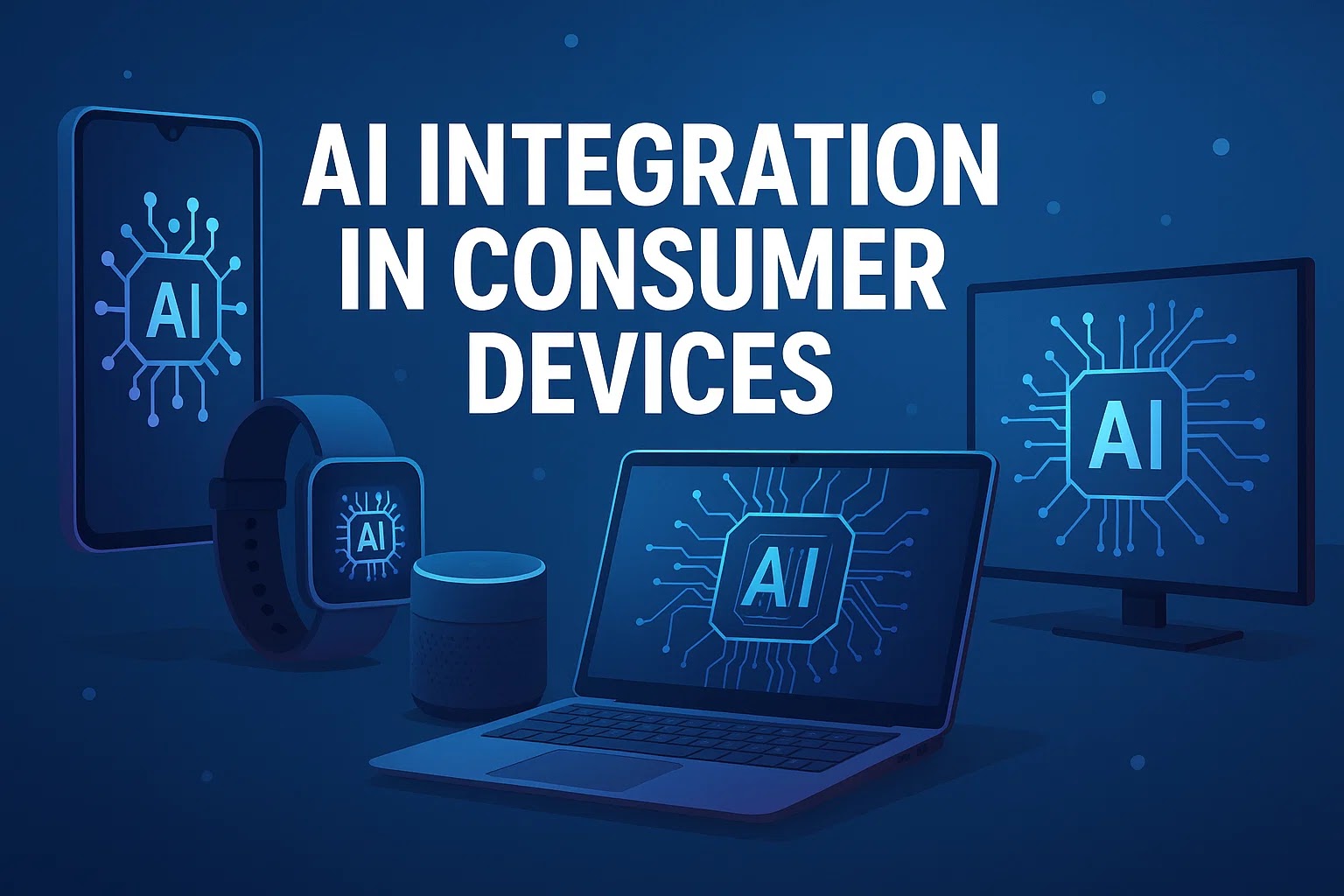
AI Integration in Consumer Devices: How Artificial Intelligence Is Revolutionizing Daily Tech in 2025

Artificial Intelligence (AI) has moved from the realm of industrial automation and scientific labs into the heart of everyday consumer experiences.

In 2025, AI is not just a background technology — it's embedded in the phones we use, the appliances we rely on, the cars we drive, and even the clothes we wear. This transformation represents one of the most significant shifts in consumer technology, as intelligent systems are reshaping how we interact with the world around us.

What Is AI Integration in Consumer Devices?

AI integration refers to embedding machine learning models, natural language processing (NLP), computer vision, and decision-making algorithms into consumer-facing hardware and software. These integrations allow devices to learn from user behavior, make intelligent decisions, and automate tasks that once required human input.

Key AI-Integrated Consumer Devices in 2025

  • Smartphones: AI powers everything from voice assistants and camera enhancements to real-time translation and personal recommendations.
  • Wearables: Smartwatches and fitness trackers analyze biometric data to predict health risks and suggest lifestyle changes.
  • Smart Home Devices: AI-enabled thermostats, lighting systems, and appliances learn routines to reduce energy consumption and increase convenience.
  • Automobiles: Self-driving features, driver behavior analysis, and predictive maintenance rely on deep AI integration.
  • Smart TVs and Entertainment Systems: Content recommendations, voice commands, and adaptive screen brightness use machine learning algorithms.

How AI Enhances Consumer Technology

1. Personalization

AI systems personalize user experiences by learning preferences and behaviors. From Spotify’s music suggestions to YouTube’s recommended videos, AI adapts content in real-time. Smart refrigerators learn your grocery habits and suggest shopping lists. Fitness trackers offer workout routines based on historical data and current health indicators.

2. Automation and Convenience

Smart homes powered by AI automate daily tasks. Thermostats like Google Nest adjust temperature based on when you're home. AI-powered vacuum robots clean efficiently based on room mapping and activity levels. Voice assistants schedule reminders, place online orders, and manage household chores with simple commands.

3. Improved Security

AI-enabled home cameras detect unusual activity and distinguish between familiar faces and strangers. Biometric security systems use facial recognition and fingerprint scanning enhanced by deep learning models for fraud prevention and secure access control.

4. Predictive Maintenance

AI in appliances and vehicles can detect potential failures before they occur. Smart washing machines alert users about maintenance, and electric vehicles analyze battery health and usage patterns for optimal performance.

AI in Smartphones: More Intelligent Than Ever

Smartphones in 2025 are AI-driven hubs. Key AI applications include:

  • Real-time language translation using on-device AI for speed and privacy.
  • Enhanced photography through AI scene recognition, night mode, and object removal.
  • Battery optimization based on usage patterns and charging habits.
  • AI-powered call screening to avoid spam and filter unwanted contacts.
  • Generative AI tools that help users write messages, design posts, or edit videos directly on their phones.

Wearables and Health Tech: AI at the Edge

Wearables now function as on-body AI agents:

  • Heart rate monitoring with anomaly detection for early health intervention.
  • Sleep tracking with AI-generated tips for improvement.
  • Stress detection using real-time biometric analysis and feedback mechanisms.
  • Medication reminders and AI-adjusted health goals based on progress.

AI-Powered Smart Homes

AI makes homes smarter and more energy-efficient:

  • Lighting systems adjust automatically based on time of day, weather, or user activity.
  • Security systems use AI to recognize household members and detect suspicious behavior.
  • Voice assistants learn user preferences for better scheduling, reminders, and task automation.

AI in Automotive Tech

Self-driving technology is progressing fast. In 2025, AI in vehicles supports:

  • Autonomous driving in controlled environments like highways or geo-fenced areas.
  • Driver monitoring to detect drowsiness or distraction.
  • Smart route planning based on traffic, weather, and historical trends.

Challenges and Concerns of AI Integration

  • Privacy: AI collects vast amounts of personal data. Users are increasingly concerned about how this data is stored and used.
  • Bias: If AI is trained on biased data, it may make unfair or discriminatory decisions.
  • Over-reliance: Users may depend too much on AI systems, potentially reducing personal agency and decision-making skills.

The Future of AI in Consumer Devices

Over the next five years, expect deeper AI integration across more product categories:

  • AI in clothing to monitor posture, temperature, or vital signs.
  • Smarter home robots for cleaning, caregiving, and companionship.
  • Neural interfaces for controlling devices using brain signals.

Major tech companies — Apple, Google, Amazon, Samsung, and Tesla — are investing heavily in AI-driven ecosystems that offer cross-device intelligence and seamless user experiences.

Conclusion

AI integration in consumer devices is no longer a luxury — it's a standard expectation. From making our lives easier and more efficient to keeping us healthy and secure, AI is redefining how technology serves us. In 2025, as devices become smarter and more context-aware, the line between human and machine collaboration continues to blur. This is only the beginning of the AI-powered revolution in our everyday lives.

Translate

Google Search Console

You may also like:

How to Jailbreak iPhone on iOS 15.0 – iOS 16.6.1 Using Dopamine Jailbreak (Full Guide)

Jailbreaking is finally back in a big way, and the Dopamine Jailbreak has quickly become one of the most popular modern jailbreak solutions ...

Popular Posts