Smart Glasses Entering the Mainstream: The Future of Wearable Tech in 2025

Smart Glasses Entering the Mainstream: The Future of Wearable Technology in 2025
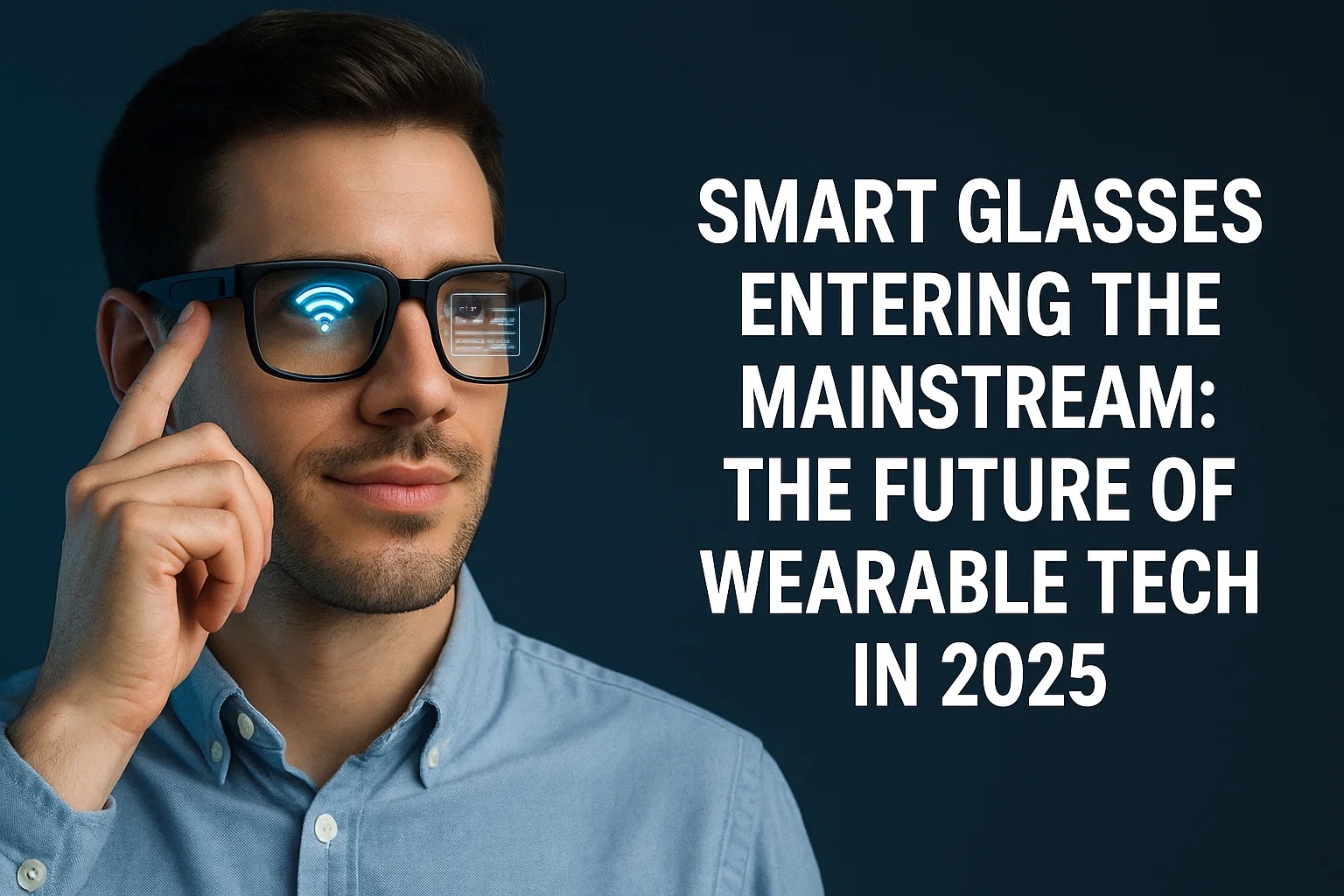


Smart glasses are no longer a futuristic fantasy; in 2025, they are becoming a part of daily life. These cutting-edge devices have transitioned from experimental concepts to practical tools for consumers and businesses alike. With advancements in augmented reality (AR), artificial intelligence (AI), and wearable design, smart glasses are poised to disrupt everything from communication and entertainment to productivity and education.

What Are Smart Glasses?

Smart glasses are wearable technology in the form of eyeglasses that incorporate digital displays, sensors, microphones, cameras, and connectivity features. These glasses can display information directly in the wearer’s field of view, capture video, translate text in real-time, and even run AR applications. They combine the visual experience of traditional glasses with the intelligence of smartphones and headsets.

The Rise of Smart Glasses in 2025

Until recently, smart glasses had limited adoption due to high prices, bulky designs, and privacy concerns. But now, in 2025, tech giants like Meta, Apple, Google, and Samsung have solved many of these issues with refined designs and more practical use cases.

  • Meta’s Ray-Ban Meta Smart Glasses (Gen 2): Lightweight, stylish, and integrated with Meta AI and voice controls, these are perfect for content creators and social users.
  • Apple Vision Glasses (rumored): Apple is expected to unveil smart glasses that connect seamlessly with iPhones and other Apple devices. The rumored features include hands-free Siri, live language translation, and AR wayfinding.
  • Google Iris Project: Google is making a strong comeback in the smart glasses market, focusing on real-world applications like instant translation, navigation, and productivity tools for enterprise users.

Why Smart Glasses Are Going Mainstream

Several factors have aligned in 2025 to push smart glasses into the mainstream market:

1. Improved Design and Comfort

Today’s smart glasses look like regular eyewear. Companies are focusing on lightweight materials, minimalist styles, and user comfort. Collaborations with fashion brands like Ray-Ban and Warby Parker help remove the stigma of wearing “techy” gadgets in public.

2. Affordable Pricing

Smart glasses are becoming more affordable. While premium models still carry a hefty price tag, entry-level and mid-range options are now priced similarly to high-end smartphones. Monthly payment plans and insurance coverage also increase accessibility.

3. AI Integration

With the rise of generative AI, smart glasses are becoming more intelligent. They can now analyze your surroundings, answer questions, provide contextual information, and even summarize conversations. AI makes these devices highly personalized and adaptive to the user’s needs.

4. Enhanced Battery Life

Battery efficiency has improved significantly. Many smart glasses now last a full day on a single charge thanks to low-power processors and efficient displays. Fast-charging capabilities are also common in 2025 models.

5. Real-Life Use Cases

More people now see practical value in smart glasses:

  • Navigation: AR directions while walking or cycling.
  • Fitness: Workout stats displayed during running or cycling.
  • Translation: Real-time subtitle overlays when speaking with people who speak other languages.
  • Content Creation: Hands-free video capture for vloggers, TikTokers, and YouTubers.
  • Remote Work: On-screen prompts, task lists, and live meeting transcripts.

Smart Glasses in Different Industries

1. Healthcare

Doctors use smart glasses for surgery assistance, patient monitoring, and remote consultations. AR overlays can show vitals or instructions in real-time during procedures.

2. Education

Classrooms are transforming with AR learning through smart glasses. Students can interact with 3D models, historical re-creations, and science simulations.

3. Manufacturing and Engineering

Workers access blueprints, checklists, and real-time diagnostics while keeping both hands free. Smart glasses reduce downtime and error rates in complex systems.

4. Retail and E-commerce

Smart glasses enable virtual try-ons for customers both in-store and online. Sales staff can receive live inventory updates and personalized shopper info.

5. Tourism and Travel

Smart glasses enhance sightseeing with AR information overlays about landmarks, directions, and local guides. Language translation features bridge communication gaps for travelers.

Top Smart Glasses in 2025

  • Meta Ray-Ban Meta Smart Glasses (2nd Gen) — Perfect for lifestyle and content creators.
  • Snap Spectacles 4 — AR-focused for creators and early adopters.
  • Vuzix Blade 2 — Ideal for enterprise use and field service workers.
  • Apple Smart Glasses (Expected) — Seamless integration with iOS and Apple ecosystem.
  • Xiaomi Smart Glasses — Affordable and feature-rich for global consumers.

Privacy, Security, and Ethics

Privacy remains a major concern with smart glasses:

  • Recording without consent: Many devices can record video silently, raising ethical and legal questions.
  • Data security: Devices constantly collect and process personal data.
  • Facial recognition: While powerful, it can be invasive and discriminatory if misused.

Governments and companies are working on clearer regulations and transparency policies to address these concerns.

How Smart Glasses Will Change Our Daily Lives

Imagine walking down the street with turn-by-turn navigation displayed in your vision. Or ordering food from a menu automatically translated into your language. Or attending a Zoom meeting without ever pulling out your phone or laptop. This is the everyday potential of smart glasses in 2025.

For professionals, they offer productivity tools and real-time information. For students, they bring immersive learning. For content creators, they enable instant footage capture. The potential is vast and growing.

Market Forecast and Trends

According to IDC and Statista, the global smart glasses market is projected to reach over $20 billion by 2027. Growth will be driven by 5G connectivity, edge computing, and rising enterprise adoption.

Trends to Watch:

  • More Fashion Collaborations: Expect more stylish smart glasses made in partnership with fashion brands.
  • Gaming Integration: Cloud gaming overlays with AR and immersive controls.
  • Social Features: Real-time sharing, content editing, and location tagging.
  • AI-Powered Assistants: Context-aware support based on location, calendar, and user history.

Conclusion

Smart glasses are not just a tech fad. In 2025, they are carving a niche as the next big step in personal computing. With AI, AR, and sleek design converging, these devices offer utility, entertainment, and connectivity in one wearable form.

The mainstream adoption of smart glasses is just beginning. As costs drop, apps grow, and design matures, we may soon see smart glasses become as common as smartphones. For consumers, creators, and companies alike — the smart eyewear revolution has arrived.

How to Get Your YouTube Channel Monetized in 2025 (Step-by-Step)

How to Get Your YouTube Channel Monetized in 2025

How to Get Your YouTube Channel Monetized in 2025 (Step-by-Step)

If you're wondering how to get your YouTube channel monetized in 2025, you're in the right place. This detailed guide will teach you how to meet YouTube Partner Program (YPP) requirements, grow your audience, and start earning money through Google AdSense.


๐Ÿ“Œ YouTube Monetization Requirements in 2025

To join the YouTube Partner Program, your channel must meet the following updated requirements as of 2025:

  • ✅ 1,000 subscribers
  • ✅ 4,000 valid public watch hours in the past 12 months OR 10 million Shorts views in 90 days
  • ✅ Two-step verification enabled on your Google account
  • ✅ No active community guideline strikes
  • ✅ Link your channel with an approved Google AdSense account

๐ŸŽฏ Step 1: Choose a Profitable Niche

The first step in monetizing your YouTube channel is selecting a niche with both audience demand and monetization potential. Some high CPM niches in 2025 include:

  • ๐Ÿ’ผ Finance and investing
  • ๐Ÿ“ฑ Tech reviews and gadgets
  • ๐ŸŽ“ Online education & tutorials
  • ๐Ÿ‘จ‍๐Ÿ’ผ Business & entrepreneurship
  • ๐Ÿ“ฆ Product reviews (affiliate marketing)

๐Ÿง  Step 2: Plan SEO-Optimized Video Content

Use tools like TubeBuddy, VidIQ, and Google Trends to find high-ranking keywords. Your titles, descriptions, and tags should include:

  • Primary keyword (e.g., “How to monetize YouTube channel in 2025”)
  • Secondary keywords (“earn money from YouTube,” “YouTube watch time tips”)
  • Relevant hashtags (#YouTubeTips #Monetization2025)

๐Ÿ“น Step 3: Upload Consistent, High-Quality Videos

Post at least 2–3 videos weekly. Ensure your videos are:

  • ⏱️ Over 8 minutes (for mid-roll ads later)
  • ๐Ÿ“บ HD quality (720p or 1080p minimum)
  • ๐Ÿ“ Include closed captions and timestamps

๐Ÿš€ Step 4: Grow Subscribers Organically

Tips to gain 1,000 YouTube subscribers fast:

  • ✅ Add a CTA at the start and end of your videos: “Subscribe now for more!”
  • ✅ Promote your channel on social media (Instagram, TikTok, Facebook groups)
  • ✅ Collaborate with other YouTubers in your niche
  • ✅ Pin a comment with a subscription link in every video

⏳ Step 5: Boost Watch Time Hours

Watch time is king. Here’s how to increase your 4,000 watch hours:

  • ๐ŸŽž️ Create playlists to keep viewers binge-watching
  • ๐Ÿ“ˆ Use YouTube Analytics to track viewer retention
  • ๐Ÿ’ฌ Ask viewers to comment and engage (which triggers the algorithm)

๐Ÿ’ฐ Step 6: Set Up AdSense for YouTube

Once you meet the requirements:

  1. Go to YouTube Studio → Monetization
  2. Click “Apply now” to join YPP
  3. Connect your existing or new Google AdSense account
  4. YouTube will review your channel (takes 1–2 weeks)

๐Ÿ“ฆ Step 7: Enable All Monetization Features

Once approved, you can start earning from:

  • ๐ŸŽฅ In-stream ads
  • ๐ŸŸฆ Display and overlay ads
  • ๐Ÿ”ด Super Chats & Super Stickers (for livestreams)
  • ๐Ÿ’ณ Channel Memberships
  • ๐Ÿงข YouTube Shopping and Affiliate Links

๐Ÿ” Bonus Tips for Long-Term Monetization

  • ๐Ÿงฉ Avoid reused or copyright content — stick to original material
  • ๐Ÿ’ก Stay consistent — build trust with weekly uploads
  • ๐Ÿ“ฃ Reply to comments — boost engagement signals
  • ๐Ÿ“Š Monitor analytics — double down on what works

๐Ÿ“ˆ Start Earning from YouTube in 2025

With the right strategy, you can monetize your channel in just a few months. Stay consistent, focus on value-driven content, and always optimize for SEO. Once you get accepted into the YouTube Partner Program, the real growth begins.

Have questions or need help getting approved? Drop them in the comments or email us anytime!

AI-Powered Cybersecurity in 2025: The New Frontier of Digital Defense


As we navigate deeper into 2025, the cybersecurity landscape is undergoing a dramatic transformation.

The increasing complexity and frequency of cyberattacks have rendered traditional security measures inadequate. In response, artificial intelligence (AI) has emerged as a game-changing force in protecting digital infrastructure. AI-powered cybersecurity is not just a trend — it is becoming the cornerstone of modern digital defense.


Why Traditional Cybersecurity Measures Are No Longer Enough

For years, firewalls, antivirus software, and manual monitoring formed the backbone of digital security. However, cybercriminals have evolved their techniques. Attacks are now more automated, targeted, and sophisticated — often bypassing conventional security layers without triggering alarms. As a result, organizations are seeking more dynamic and intelligent defense systems capable of adapting in real time. Enter AI.

How AI Works in Cybersecurity

AI systems use machine learning (ML), natural language processing (NLP), and advanced analytics to identify, analyze, and respond to threats. Unlike rule-based systems, AI can learn from historical data, adapt to new patterns, and make decisions independently — all without human intervention.

These systems rely on training datasets that include known cyber threats and user behaviors. Over time, the AI refines its models to improve detection rates and reduce false positives. The more data it processes, the smarter and more accurate it becomes.

Key Applications of AI in Cybersecurity

1. Threat Detection

AI enables real-time threat detection by analyzing network traffic and user behavior continuously. Instead of waiting for signature updates like traditional antivirus systems, AI flags anomalies instantly. For example, if a user suddenly tries to access sensitive files from an unknown location at 3 a.m., the system can identify this as a potential breach and take action.

2. Malware and Ransomware Prevention

AI excels at detecting polymorphic malware — malicious software that constantly changes its code to evade detection. Through deep learning, AI identifies malware not just by its signature but by its behavior, structure, and even intent. This proactive approach helps neutralize zero-day threats before they cause harm.

3. Phishing Detection

Phishing remains one of the most common attack vectors. AI-powered email filters analyze text patterns, sender behavior, and metadata to detect phishing attempts with high accuracy. Unlike older filters that rely on known malicious URLs or keywords, AI can identify phishing messages that have never been seen before.

4. Automated Incident Response

When a threat is detected, time is critical. AI can automate response actions such as quarantining infected devices, shutting down compromised accounts, and initiating backup recovery. This rapid response minimizes damage and improves operational continuity.

5. Behavioral Biometrics

AI-based systems track how users interact with their devices — from typing speed to mouse movement — to create behavioral profiles. These profiles help detect unauthorized access even if login credentials are stolen. If the typing rhythm doesn’t match the user’s usual pattern, access can be denied or flagged.

Benefits of AI in Cybersecurity

Speed and Scalability

AI processes massive volumes of data in seconds, making it ideal for organizations with complex networks or multiple endpoints. Whether monitoring IoT devices, cloud platforms, or mobile apps, AI ensures that no potential threat goes unnoticed.

Lower Operational Costs

AI reduces the need for large security teams by automating monitoring, detection, and even response. This is especially beneficial for small to mid-sized businesses that may lack the resources to maintain a 24/7 cybersecurity staff.

Improved Accuracy

Unlike humans, AI doesn’t suffer from fatigue. Its ability to continuously learn and adapt leads to fewer false alarms and more accurate threat classification.

Predictive Intelligence

AI can identify patterns that indicate an imminent attack, allowing organizations to take preemptive action. For instance, unusual activity in a company’s system could signal a forthcoming data breach or DDoS attack.

Challenges and Risks of AI in Cybersecurity

1. Data Privacy Concerns

AI requires access to large datasets, often containing sensitive information. Improper data handling can result in privacy violations or compliance issues with laws like GDPR or CCPA.

2. Adversarial Attacks

Cybercriminals are now targeting AI systems themselves. Through “adversarial AI,” attackers feed deceptive inputs to trick the model into misclassifying threats. This form of attack is still in its infancy but is a growing concern for cybersecurity professionals.

3. High Implementation Costs

Advanced AI cybersecurity tools often come with a hefty price tag. Implementation involves infrastructure upgrades, data integration, and skilled personnel — which can be a barrier for some organizations.

4. AI Bias and Limitations

AI models can reflect the biases in the data they are trained on. If historical data contains flawed patterns or underrepresents certain types of threats, the AI’s performance may be compromised. Ongoing monitoring and retraining are essential to maintain effectiveness.

Real-World Examples in 2025

IBM Security

IBM’s Watson for Cyber Security uses AI to analyze millions of security documents and detect threats in real-time. In 2025, its deployment in large financial institutions has helped reduce incident response time by over 60%.

Darktrace

Darktrace’s AI-based Enterprise Immune System detects cyber threats by modeling the normal behavior of every device, user, and network. In early 2025, Darktrace successfully identified a sophisticated insider threat at a multinational energy company — something human analysts missed.

Google Chronicle

Google’s Chronicle platform uses AI to offer real-time threat hunting across cloud and hybrid environments. Many startups and mid-sized companies in the U.S. have adopted it in 2025 due to its affordability and seamless Google Cloud integration.

The Future of AI in Cybersecurity

1. Integration with Blockchain

Blockchain offers transparency and immutability, while AI provides intelligent threat detection. Combining these technologies could create secure environments where transactions are both monitored and immutable, drastically reducing fraud and tampering.

2. AI-Driven SOCs

Security Operations Centers (SOCs) of the future will rely heavily on AI. Analysts will work alongside AI systems that triage alerts, predict breaches, and offer actionable insights. This will redefine how cybersecurity teams operate, shifting their role from reactive to strategic.

3. Quantum-Ready Security

With quantum computing on the horizon, current encryption methods may soon be obsolete. AI is already being tested to design quantum-resistant algorithms, ensuring long-term data protection against quantum-powered attacks.

4. AI in IoT Security

The explosion of IoT devices presents a huge attack surface. AI will be essential for managing and securing these endpoints, identifying vulnerabilities, and deploying patches autonomously — especially in sectors like healthcare and manufacturing.

Cybersecurity Careers and AI

AI is not replacing human security analysts — it’s empowering them. Professionals who understand AI tools and cybersecurity protocols are in high demand. Certifications in AI-driven security and hands-on experience with AI platforms are becoming vital credentials in 2025.

Roles like “AI Cybersecurity Engineer,” “Threat Intelligence Analyst,” and “Machine Learning Security Architect” are emerging across both public and private sectors.

Conclusion

AI-powered cybersecurity is no longer a futuristic idea — it's the present reality. As we continue through 2025, the fusion of machine intelligence and cybersecurity practices is leading to smarter, faster, and more proactive defenses. While there are challenges like data privacy, cost, and adversarial AI, the benefits far outweigh the risks.

Businesses, governments, and individuals must adapt to this shift. Investing in AI-driven tools, upskilling cybersecurity staff, and embracing automation are no longer optional — they are essential for survival in an increasingly digital world.

As threats evolve, so must our defenses — and in 2025, that defense is powered by AI.

Translate

Google Search Console

You may also like:

How to Jailbreak iPhone on iOS 15.0 – iOS 16.6.1 Using Dopamine Jailbreak (Full Guide)

Jailbreaking is finally back in a big way, and the Dopamine Jailbreak has quickly become one of the most popular modern jailbreak solutions ...

Popular Posts